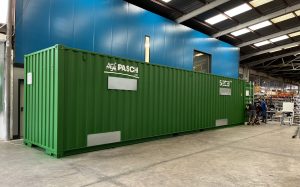
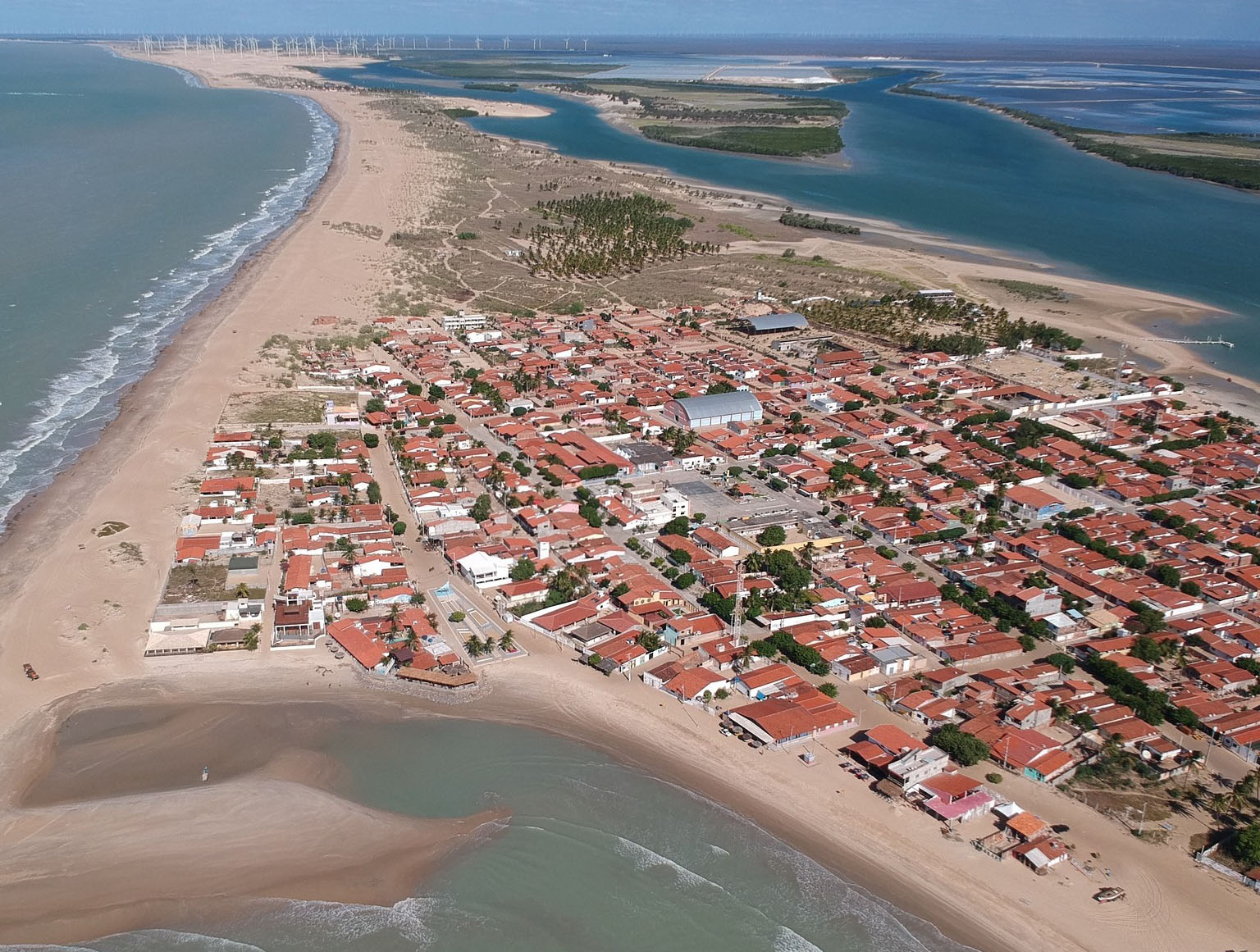
SETA has been selected by Águas do RN for the design, manufacturing, supply, commissioning and training of a containerized desalination plant using reverse osmosis, aimed at improving access to drinking water in a coastal locality in the state of Rio Grande do Norte, Brazil.
This project is part of a regional strategy to combat water scarcity in areas where seawater is the only available source. Brazil, with its extensive coastline and climatic diversity, represents an ideal environment for the deployment of modular desalination solutions, especially in communities that require a fast, efficient, and sustainable response.
Standardized, accessible, and fast solutions
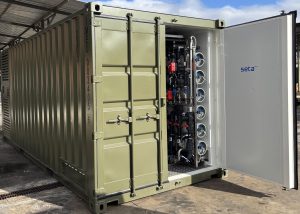
The plant, with a production capacity of 250 m³/day, is fully integrated into a 40-foot maritime container, enabling quick, safe installation with minimal civil works.
Thanks to its standardized design, SETA can manufacture these units in very short timeframes while maintaining competitive costs, making it possible to bring high-quality technology to areas with limited resources.
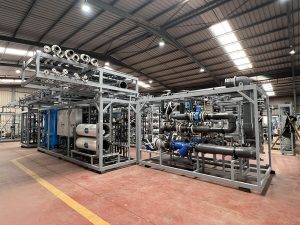
Each unit is manufactured entirely in our workshops, ensuring quality control, component traceability, and the possibility of performing tests prior to shipment, minimizing commissioning time at the destination.
These modular solutions allow the model to be replicated in different locations, easily adapting to local needs and facilitating transport, installation, and operation logistics.

Advanced technology and sustainability: efficiency in the service of water
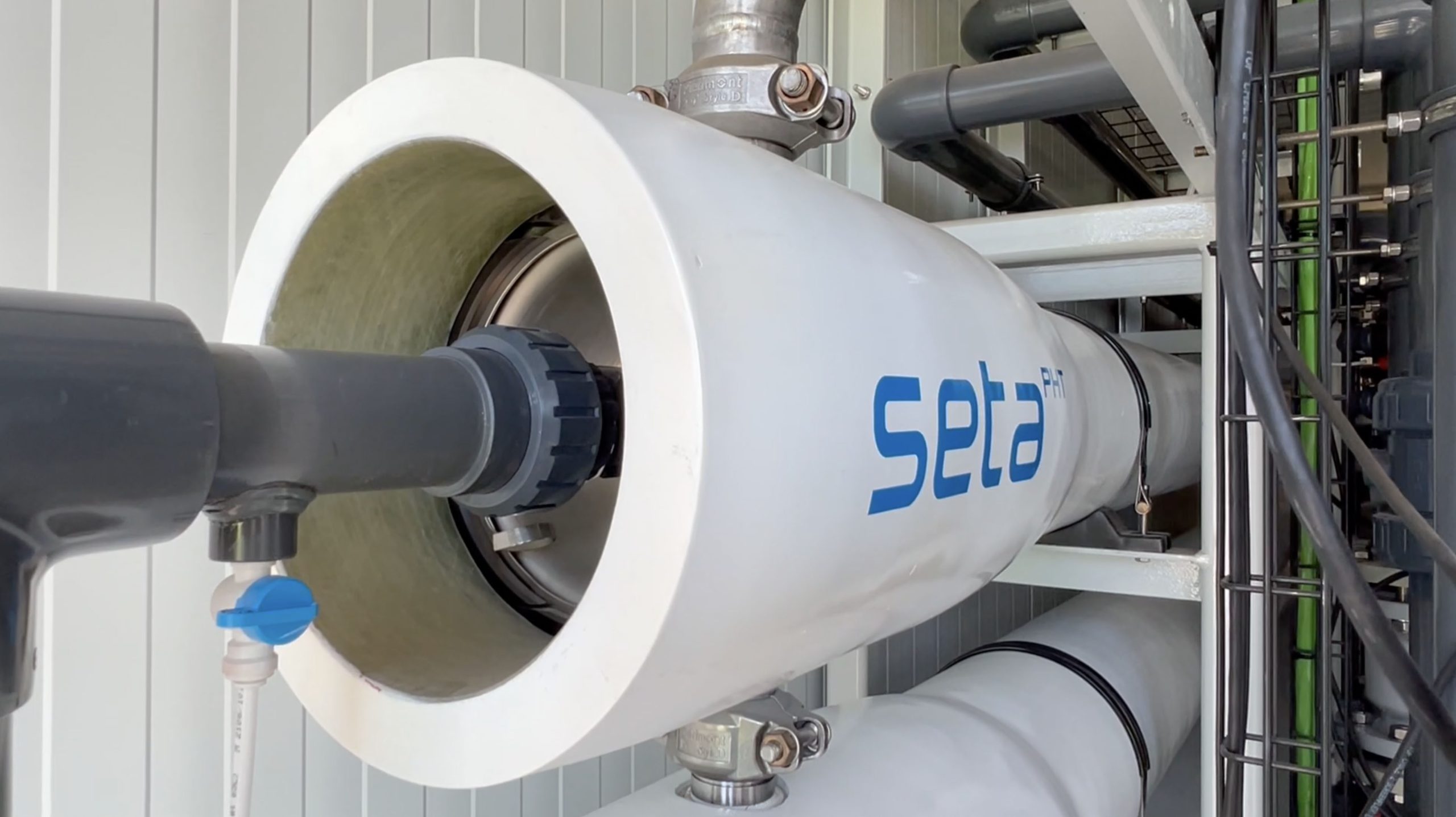
The supplied plant incorporates state-of-the-art technology in water treatment through reverse osmosis, designed to maximize energy efficiency and minimize environmental impact. Among other aspects, the following stand out:
- Reverse osmosis system with energy recovery, which reduces electrical consumption to below 3 kWh/m³.
- Latest-generation reverse osmosis membranes, with high flow and low fouling, allowing more efficient operation, extending system lifespan, and reducing maintenance costs.
- Full automation through PLC, with a touch interface that allows the operator to control all process parameters in real time.
- Pre- and post-treatment, ensuring water quality according to World Health Organization (WHO) standards, including remineralization and residual chlorination.
- Eco-efficient design, which considers the reduction of chemical products, optimization of water consumption, and the lowering of acoustic emissions.
Additionally, the system is equipped with the corresponding instrumentation for flow, pressure, pH, conductivity, and level control, among others, allowing safe, reliable operation adapted to local conditions.
Commitment to sustainable development
This project reaffirms SETA’s commitment to the development of accessible, sustainable, and replicable technological solutions, which contribute to improving quality of life in vulnerable regions and promoting the responsible use of water resources.
The containerized desalination plant is an example of how innovation can be put at the service of people, providing safe water where it is needed most.