The availability of drinking water is the most critical factor following a catastrophe. For this reason, emergency water treatment plants have become an indispensable tool for modern humanitarian aid. When a natural disaster destroys basic infrastructure, the capacity for a rapid response makes the difference between recovery and a full-scale health crisis.
What are emergency water treatment plants?
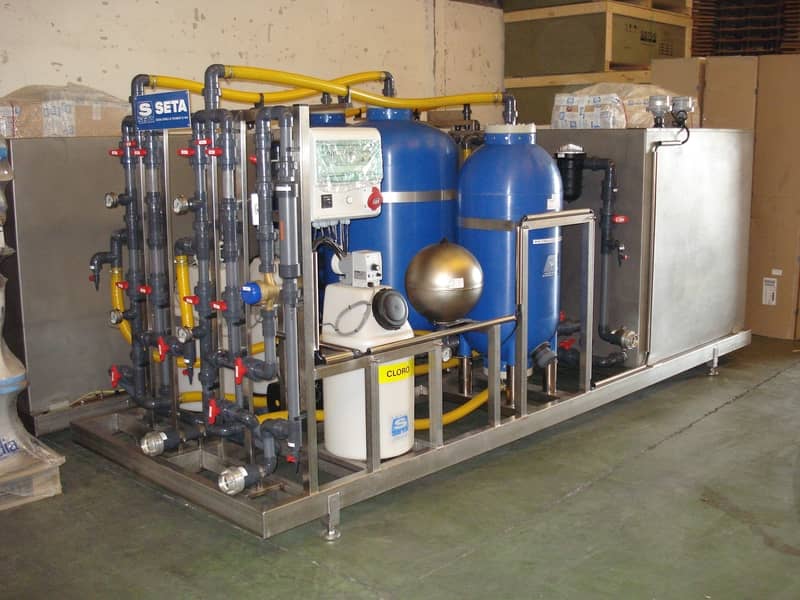
Emergency water treatment plants are mobile units designed for immediate intervention. These systems allow for the transformation of water from contaminated sources, or those with high salinity, into water suitable for human consumption within a matter of hours.
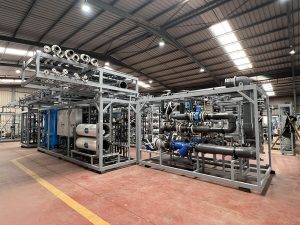
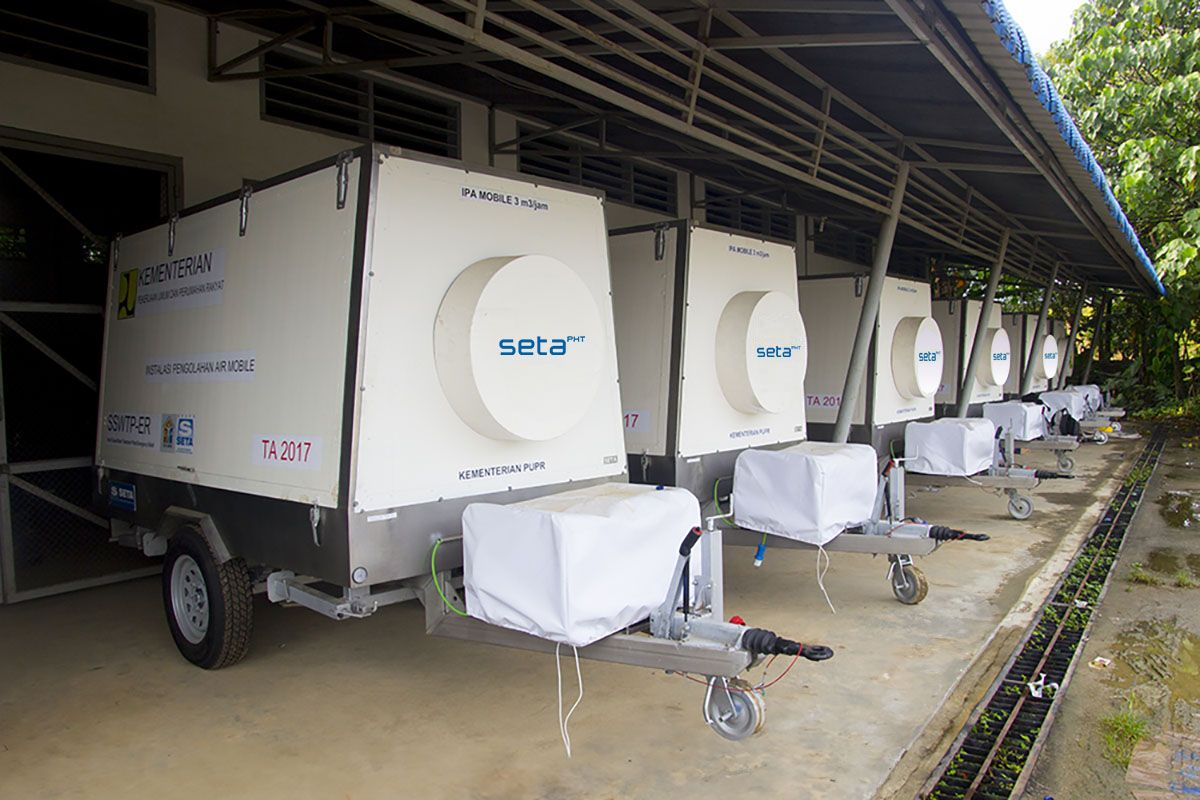
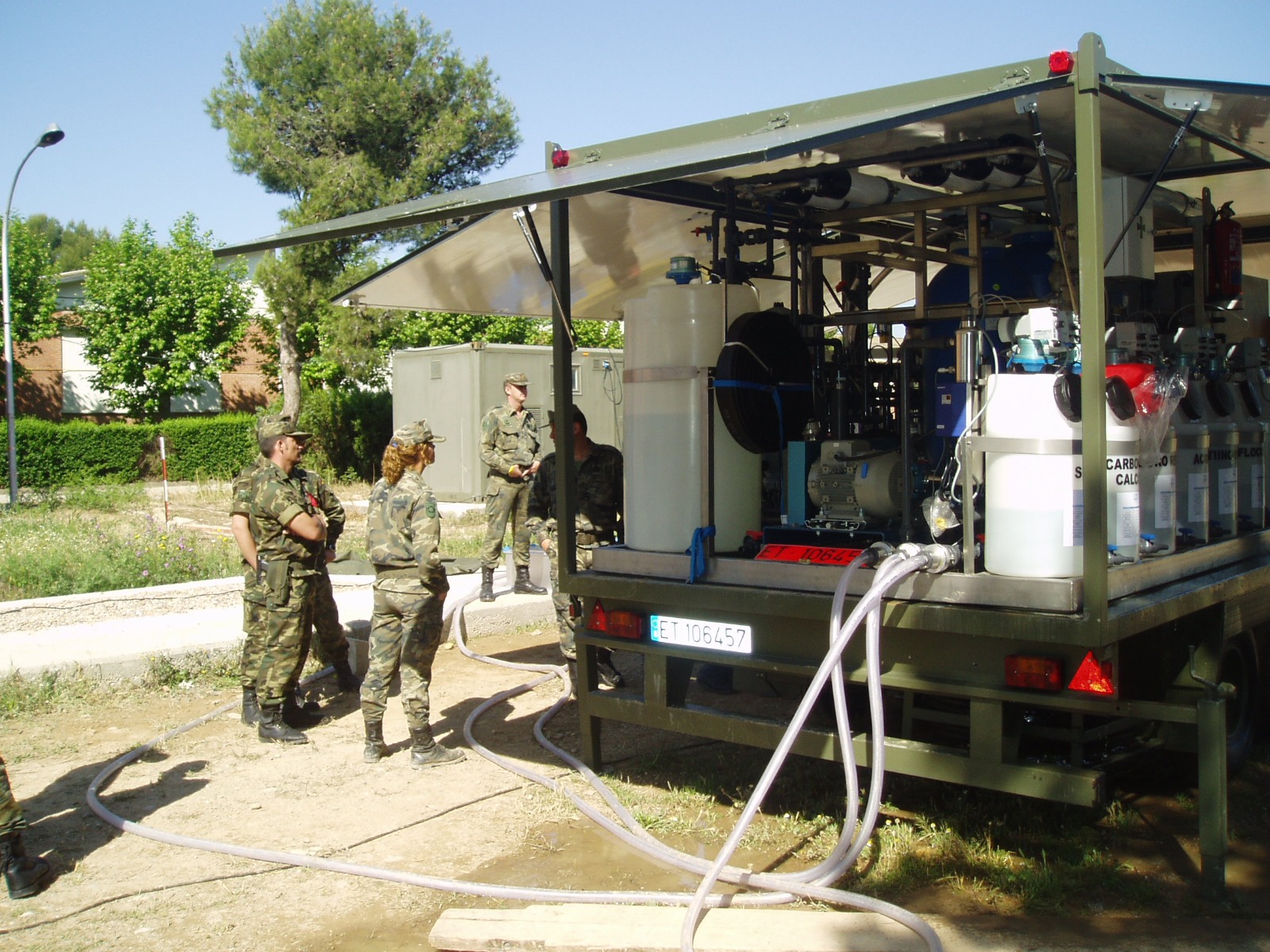
Currently, SETAᴾᴴᵀ develops technologies that adapt to any terrain and extreme condition. Due to their modular design, these plants can be easily transported on trailers, wheeled platforms, or containers.
Thanks to their portability and high performance, these solutions are suitable for:
- Rural or isolated communities
- Municipalities that need reinforcement in emergency plans
- Areas with damaged infrastructure
- Civil protection operations and humanitarian aid
- Regions affected by droughts or water contamination.
Types of treatment for rapid response
Not all natural disasters present the same water challenge. Therefore, at SETAᴾᴴᵀ we offer different solutions according to the SETAQUA model:
- 2E Treatment (Surface Water): This system focuses on removing high turbidity and microbiological contamination. It is ideal for floods or overflowing rivers.
- 3E Treatment (Brackish or Sea Water): Incorporates reverse osmosis technology to remove salts and chemical contaminants. It is mainly used after tsunamis or in areas where freshwater has been compromised.
Operational advantages in crisis scenarios
The effectiveness of a humanitarian response depends on the simplicity and robustness of the equipment. For this reason, emergency water treatment plants from SETAᴾᴴᵀ offer specific benefits:
- Immediate installation: Being factory-assembled, they require zero or minimal civil engineering work.
- Energy autonomy: The equipment includes its own power generator to operate in areas without an electrical grid.
- Simplified operation: Their automated operation allows them to be used by non-specialized personnel after a brief training period.
- Logistical mobility: Their standard size allows for transport by truck, ship, or cargo plane to any part of the world.
Compliance with international health standards
It is essential that the water produced is not only clear but safe. Therefore, all our solutions strictly comply with the parameters of the World Health Organization (WHO). In addition to filtration and settling, the process includes a final chlorination stage to ensure disinfection within the distribution network.
“Ensuring access to drinking water not only improves health but also drives social stability after a catastrophe.”
Success stories: Global technical response
The reliability of these systems has been proven in more than 50 countries. Below, we analyze how Spanish engineering has led key humanitarian responses:
SSWTP-ER Project in Indonesia
After several natural disasters, the Indonesian Ministry of Public Works entrusted SETAᴾᴴᵀ with the supply of 56 emergency water treatment plants. As a result, 280,000 inhabitants in critical areas benefited.
Support for Armed Forces and NGOs
Entities such as UNICEF, the Red Cross, and the Armed Forces use this equipment in their peace missions. Their robustness makes them suitable for extreme climates, from deserts to tropical zones.
Frequently asked questions about emergency water treatment plants
Below, we resolve the most common doubts that arise when planning the deployment of this equipment in disaster zones.
1. How long does it take to start up a mobile plant?
Start-up is practically immediate thanks to its integral design. Once the equipment arrives on the field, it can begin producing drinking water in a matter of hours, as it comes fully assembled and factory-tested.
2. What type of water can this equipment treat?
Our mobile units are extremely versatile and can operate with almost any available water source. Depending on the model, they can treat river water (surface), well water, and even seawater with high salinity.
3. Is it necessary to hire engineers to operate the plant on-site?
Highly specialized personnel are not required. The management and operation have been simplified through automation, which allows local personnel or volunteers to operate them after brief technical training.
4. How much population can be supplied in emergency situations?
In contexts where rapid drinking water supply is required, depending on the model, a single unit is capable of providing safe water for between 1,600 and 8,000 people in emergency situations.
When the installation is used in permanent mode, the supply capacity stabilizes between 600 and 1,000 people, which guarantees a continuous and reliable flow of drinking water for populations that require long-term support or reinforcement infrastructure.
5. How is the equipment transported to difficult-to-access locations?
The design prioritizes absolute logistical mobility. The plants can be installed on all-terrain trailers, wheeled platforms, or standard shipping containers. Therefore, they can be sent by road, ship, or cargo plane anywhere in the world.
Conclusion: Preparing for the future
Given the increase in extreme weather phenomena, having emergency water treatment plants is a national security strategy. Ultimately, SETAᴾᴴᵀ technology ensures that, even in the worst conditions, drinking water is a constant reality.